Learning plans and tips💡
Hello everyone.
Thank you for letting me take time off for my trip the other day!
One of my students suggested that we think through a one-week study plan together. So I'd like to take this opportunity to share some recommended study models suited to each learner's own pace.
In putting this study plan together, here's how I think about it:
→ To improve your listening
What matters most for improving your listening is reading.
When we listen to a language we're familiar with, we're actually predicting the words that come next in our heads as we listen. We can do this because we've been exposed, over and over, to the phrase patterns that fit each situation.
Reading is a shortcut for building up those patterns effectively. It might seem unglamorous, but it's very important.
On top of that, my recommendation is to list up the "words you don't know" that you come across while reading, and to learn starting from those words. By learning vocabulary from words actually used within texts, they become vocabulary you can actually use.
→ To improve your speaking
Increase your vocabulary, plain and simple. That's what it comes down to.
In my lessons, at the very early stages I don't prioritize memorizing vocabulary. That's because I prioritize first acquiring the framework (grammar patterns) needed to make full use of vocabulary.
The idea is to get through the minimum grammar patterns as quickly as possible, and once you've internalized the patterns, you'll be able to use more and more Japanese simply by increasing your vocabulary.
→ The significance of writing
Writing is a study method that lets you calmly compare "what you want to say" with "what you can say at your current language level," and from there becomes a springboard for increasing "what you can say."
Taking the time to weave words together may actually be more important than being able to speak "fluently. "(And it also leads to that "fluency.") It's perfect for when you think, "I want to accelerate my learning pace even more!"
The order of priority in language learning is:
Internalize the patterns👉️Increase your vocabulary👉️Just try using it
Please use this as a reference, adjusting to your busyness, your goals, and the ups and downs of your motivation.
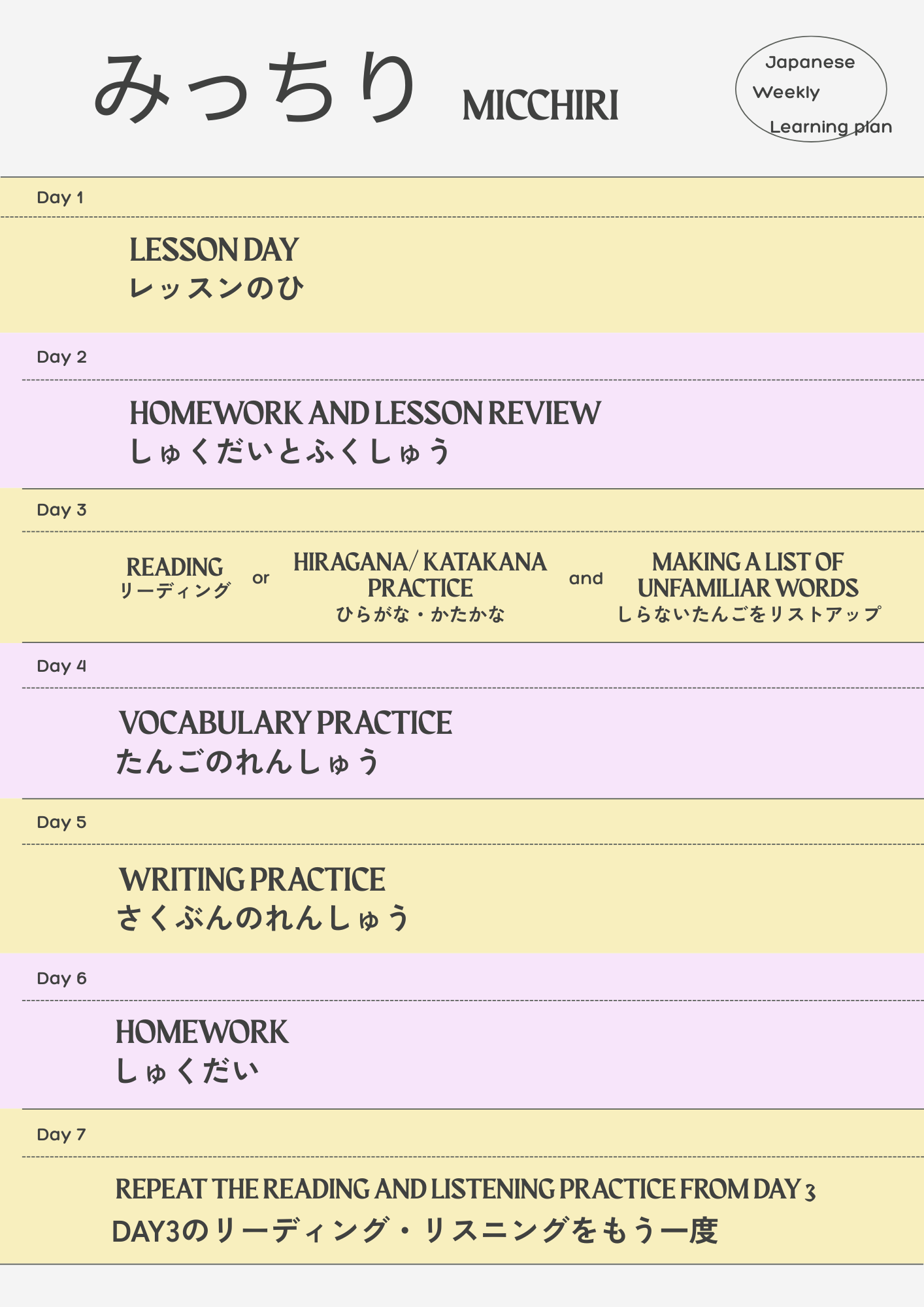
みっちり- micchiri : Intensive
しっかり- shikkari : Solid
さっくり- sakkuri : Light
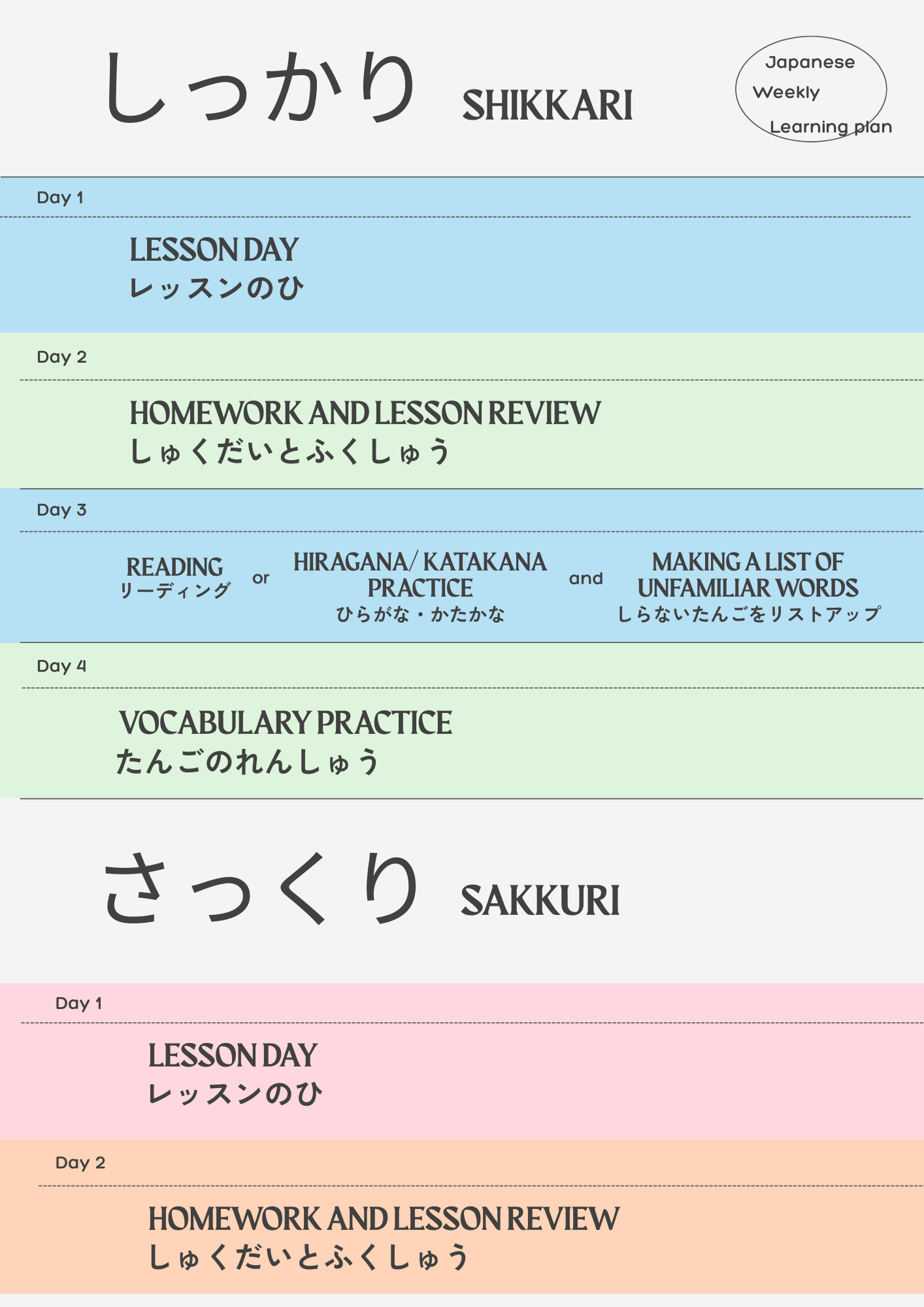
みっちり (micchiri)
Suggests packing something densely, with no gaps, and doing it thoroughly and rigorously. The focus is on volume and density — filling every available slot with study. It carries a slightly demanding, "leave no stone unturned" feeling, but in a positive, committed sense rather than a punishing one.
こんしゅうは、よていがみっちりつまっている
(This week, my schedule is packed solid.)
しっかり (shikkari)
Suggests doing something properly, steadily, and reliably, without wobbling or cutting corners. The focus is on stability and consistency. It implies a firm, well-grounded approach that you can keep up over time — solid and dependable rather than intense.
ちょっと!しっかりしてくださいよ!
(Hey! Pull yourself together!)
さっくり (sakkuri)
Suggests doing something lightly, quickly, and casually, without much strain. The focus is on lightness and tempo. It has an easygoing, low-pressure feeling — you touch the essentials briskly and move on.
きょうのかいぎはさっくりおわらせよう
(Let's wrap up today's meeting quickly.)