Self-Study App & Recommended Study Methods
Hi everyone!
Today, I’d like to introduce an app that I highly recommend for self-study.
I previously shared the web version of this tool, but Mustafa san, who is taking lessons with me, has also created an app version!
 Muhammed Mustafa Demir
▼ If you’re currently learning hiragana and katakana
There are sections for learning individual kana, as well as sections for learning them as part of words.
I recommend using the Word Kana section and practising kana through actual words!
▼ If you’ve already finished learning hiragana
In the lessons section, there are exercises where you practise typing hiragana, and I actually think this is a really good exercise.
When typing hiragana on your phone, I recommend using flick input.
It’s not only convenient once you get used to it. It also helps you maintain a physical awareness of the structure of Japanese sounds — particularly the five vowels — while you type.
- Tap: A
- ← : I
- ↑ : U
- → : E
- ↓ : O
As I explain in my pronunciation lessons, the sound system of Japanese is quite different from that of many other languages.
Understanding this system is important not only for improving your pronunciation, but also because it forms one of the foundations of how Japanese itself is structured.
Japanese native speakers generally first learn to read and write through the hiragana chart. In other words, the combination of the five vowels and the consonants is naturally built into their brains through a kind of unconscious, physical mental map.
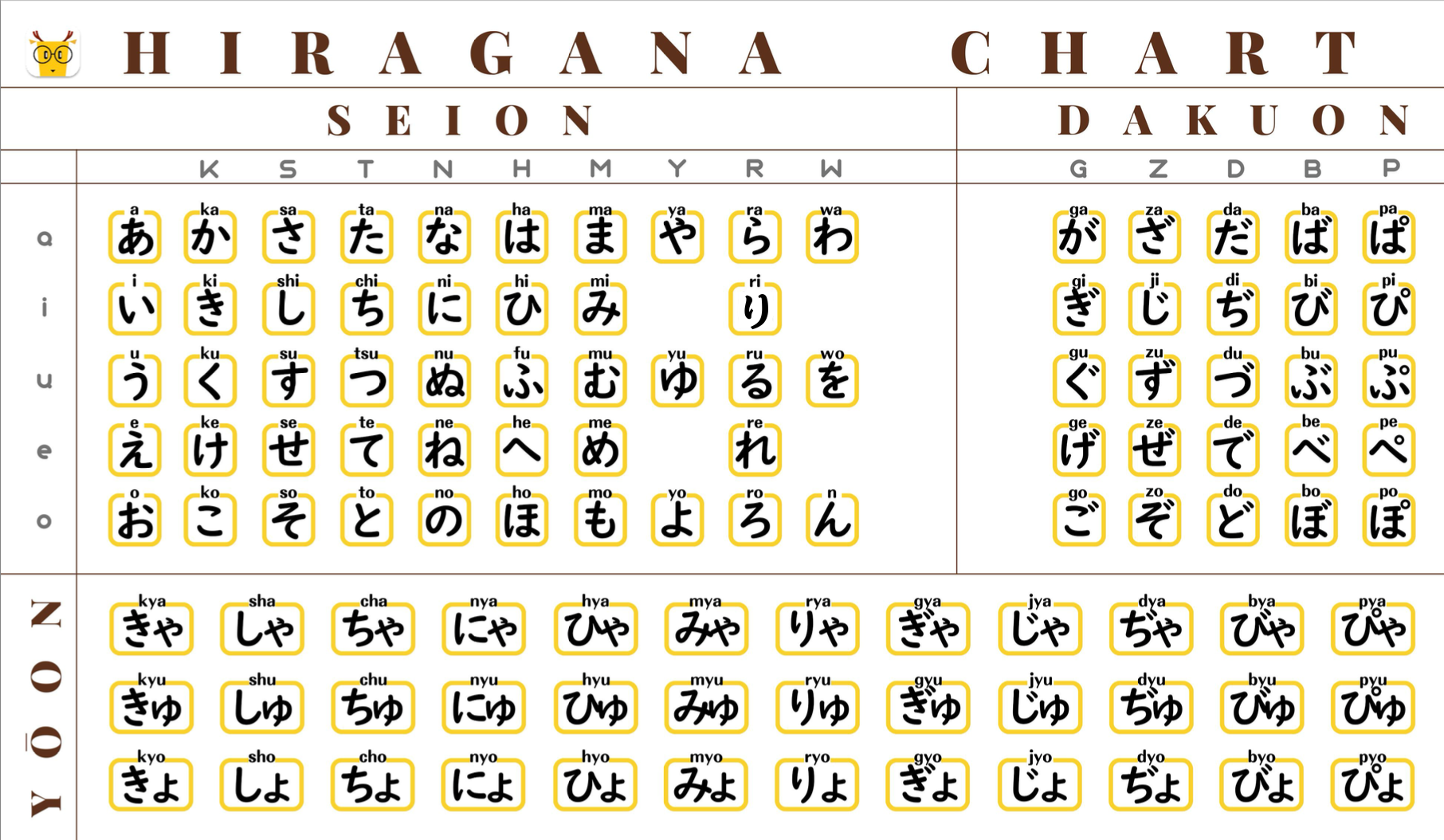
Now that smartphone-based communication has become so common, I think it has become harder for learners to develop this awareness of the relationship between the five vowels and consonants.
Many common mistakes that learners make — such as dropping vowels or leaving out long vowels — can also be related to this.
I think flick input can be a useful way to compensate for that.
There’s a video explaining how to use flick input, so please have a look if you’re not familiar with it.
 Mari Ito
▼ For reviewing your lessons
In a lot of language learning, this kind of pattern awareness — and the ability to actually use the language — is missing. Instead, learners often end up memorising one-to-one translation correspondences, such as English → Japanese.
I don’t think this is really the essence of language learning.
Language can generate infinitely many expressions through the rules and patterns that exist within the language itself. So, to me, being able to use Japanese means building that system of infinite generation inside yourself.
That’s why, in my lessons, I consciously focus on understanding grammatical patterns and developing the ability to actually use Japanese.
However, in order to truly make those patterns your own, repeated practice is essential — and I know this is the hard part!
You need to repeatedly use these rules and patterns yourself so that they gradually become integrated into your own language system.
So please use the Lessons section to review and practise what you’ve learned in our lessons.
▼ Verb conjugation practice
I especially recommend the verb conjugation exercises in the Conjugation section.
Learning verbs together with their conjugation patterns, rather than simply memorising individual verbs, will make your future Japanese learning much easier.
In particular, て-form conjugation is one of the key building blocks of Japanese.
You can also use the conjugation types, such as godan and ichidan, as hints when practising.
There are lots of features in this app, and I’m still exploring it myself!
If you notice anything interesting or have any questions about it, please feel free to let me know anytime :)
I think this can be a really useful tool for supporting the kind of learning that helps you develop the ability to actually use Japanese for yourself, so I hope you’ll give it a try!
Muhammed Mustafa Demir Conjugaizen